
Frequency Chart
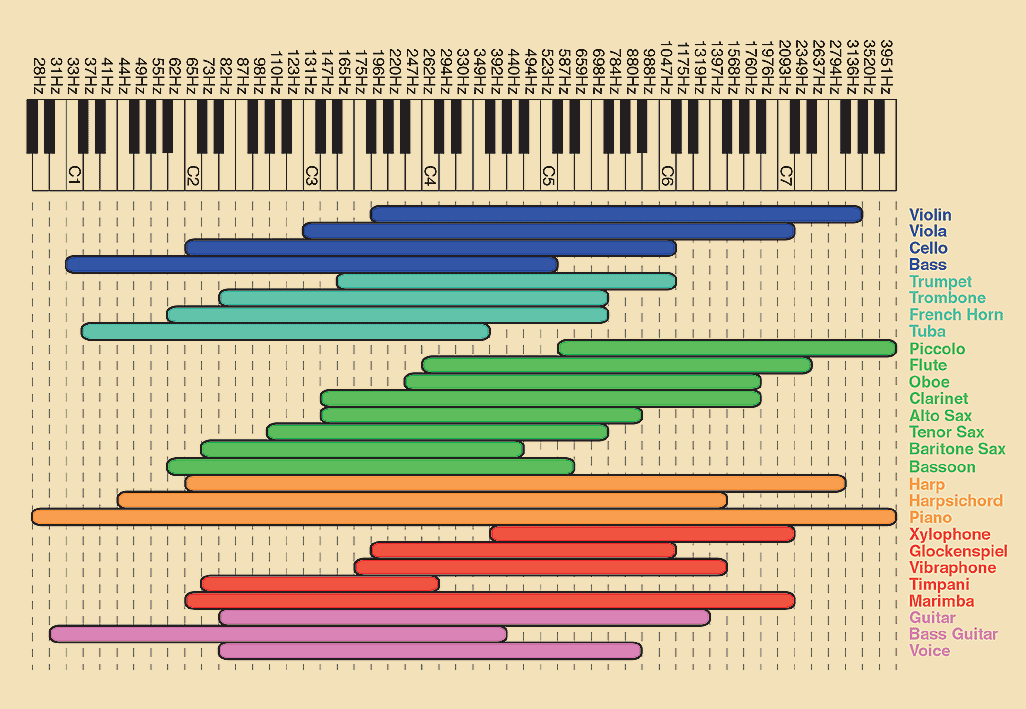
120Hz and lower: these frequencies are generally responsible for warmth in a recording. Too much and the recording will sound muddy.
120Hz – 600Hz: these frequencies give depth to a recording, giving vocals and other instruments a strong sense of presence without being clinical. On the other hand, these frequencies are where you’re most likely to experience problems with vocal resonance. Too much in this area can be particularly fatiguing.
600Hz – 3kHz: these frequencies also give presence but of a generally harder nature. High output in this region is fairly common in rock music as it gives it a hard edge that suites the genre.
3kHz- 7kHz: is the area where vocal sibilance resides. 3kHz-5kHz is a very common peaking area in rock music because human hearing is pretty sensitive here and extra output here makes it sound louder. It also adds a harshness that is particularly fatiguing so don’t over do it. Because of the high sensitivity in this region you can add warmth without loss of clarity by attenuating this region a bit.
7kHz -: Cymbals etc, and all the other components that add the sense of quality and accuracy. Above 10kHz too much output may make your recordings sound like they are lacking some definition.
If your tracks lack warmth and have too much sibilance you either have too little output below 500Hz or too much above 3kHz. A generally good balance will be pretty flat from around 60Hz up to 1-2kHz and then rolling off to be around 10-20 dB down at 10kHz. How much tapering at the spectrum ends you’ll need will depend on the nature of the music.
If there are some sharp peaks in the peak spectrum (yellow trace) that stand out above the rest then they may need to be attenuated a bit. Again, don’t try to eliminate the peak but just reduce and control it a bit. A good rule of thumb would be to reduce the peak so that it is about as high as the other undulations on the spectrum.
Finally, strong output in the region of 3-5kHz can make recordings sound fatiguing and clinical. If you have strong output in this region reduce it by approximately 3dB.